
if you asked Ben's brain about gaming, this is what it would say
Every time we sit down to play a role-playing game, we build this layer cake, stacking each level upon the previous one:
First we decide what our game is about. What are the themes.
Then we make a setting that reflects those themes.
Then we make characters who fit that setting and those themes.
Then we create a situation that fits the characters, the setting, and those themes.
Then we see what those characters do about that situation.
Keep repeating that last step, and when the situation is settled either … [ read more ]
Ben Robbins |
April 25th, 2024 |
game design, theory
There was a question in the comments about whether a West Marches GM should tell the players where the dungeons are or make them go out and search.
Players having the free will to make decisions–and get themselves into trouble doing “a little light exploring”–is at the very heart of the West Marches charter. But equally essential is the idea that, to make interesting and useful choices, you have to have information to work with. Making decisions totally blind (“you’re in a forest, do you go left or right???”) is … [ read more ]
Ben Robbins |
April 24th, 2024 |
GMcraft, west marches
| 2 comments
I had a great time talking to Justin Gary on his Think Like A Game Designer podcast. Justin includes a great text outline of some of the big topics we hit on the web page, including some of the major takeaways.
Think Like A Game Designer: Ben Robbins — World Building in Microscope, Gaming with Strangers and Writing Effective Rules (#64)
Yes, that’s me in a museum. I suppose I should say it was because I was talking about Microscope so I used a picture involving history, but honestly … [ read more ]
Ben Robbins |
April 16th, 2024 |
In This World, Microscope, talks & interviews
| 2 comments
In a previous post I talked about the issues with scenes in Microscope. Issues that often lead players to avoid scenes, which (I think) robs you of the full experience of seeing how the big history affects human lives.
The good news is that I’ve been working on a solution, which is to make scenes focus on what they were supposed to be about all along: People.
These are the rules changes I’ve been testing. There are only three small but critical updates, and you can start using them … [ read more ]
Ben Robbins |
April 10th, 2024 |
Chronicle, dev journal, Microscope, rules updates
| 2 comments
Okay, show of hands: who’s interested in a course called “Science Fiction & Public Health”??? Sign me up!
In their latest podcast, Alexis Dinno and Nell Carter talk about how they brought In This World to the classroom at the OHSU-PSU School of Public Health:
Science Fiction & Public Health Podcast, Episode 8
The In This World part starts about 33 minutes in, but the whole thing is an interesting listen. Their topic? Libraries! Which has been on my wishlist for a while now. Caveat is they had a larger … [ read more ]
Ben Robbins |
April 2nd, 2024 |
classrooms & kids, In This World
Microscope is great, but as a designer I’m always looking for ways to make my games better. And Microscope has some spots that could use an upgrade.
What’s the problem? Scenes.
I think scenes are important to Microscope, because scenes are when we zoom all the way in and see how the big history impacts individual people. It makes the whole thing more personal and meaningful. You have a better total experience when you include scenes.
But players use Scenes less than other parts of the game. Some groups leave … [ read more ]
Ben Robbins |
April 1st, 2024 |
dev journal, game design, Microscope
| 12 comments
Say you want to make characters who are all from the same small town. Or from related noble houses. Or who all came to this planet on the same generation ship.
Maybe you just want to make up their backstories, or maybe these are characters you’re actually going to play in a campaign.
Normally you could play Union and explore the family ancestry of one character: find out all about the lives of their grandparents and great parents and how all their unions led to next generation, and so on.… [ read more ]
Ben Robbins |
March 23rd, 2024 |
hacks, Union
The idea of “session zero” is a genuine step forward in the technology of gaming. Instead of just leaping into a game blindly and hoping we all enjoy the same things, we sit down together and talk about it. What kind of world do we want? Want kind of themes do we want to explore? Will our elves be imperialist jerks? Will our space smugglers struggle with debt or just do hijinks?
Discussion and consensus is a good thing. But clever gamers realized that instead of just improvising the whole … [ read more ]
Ben Robbins |
March 20th, 2024 |
how to play, story games
| 4 comments
Even more copies of In This World arriving around the globe (and also Portland).
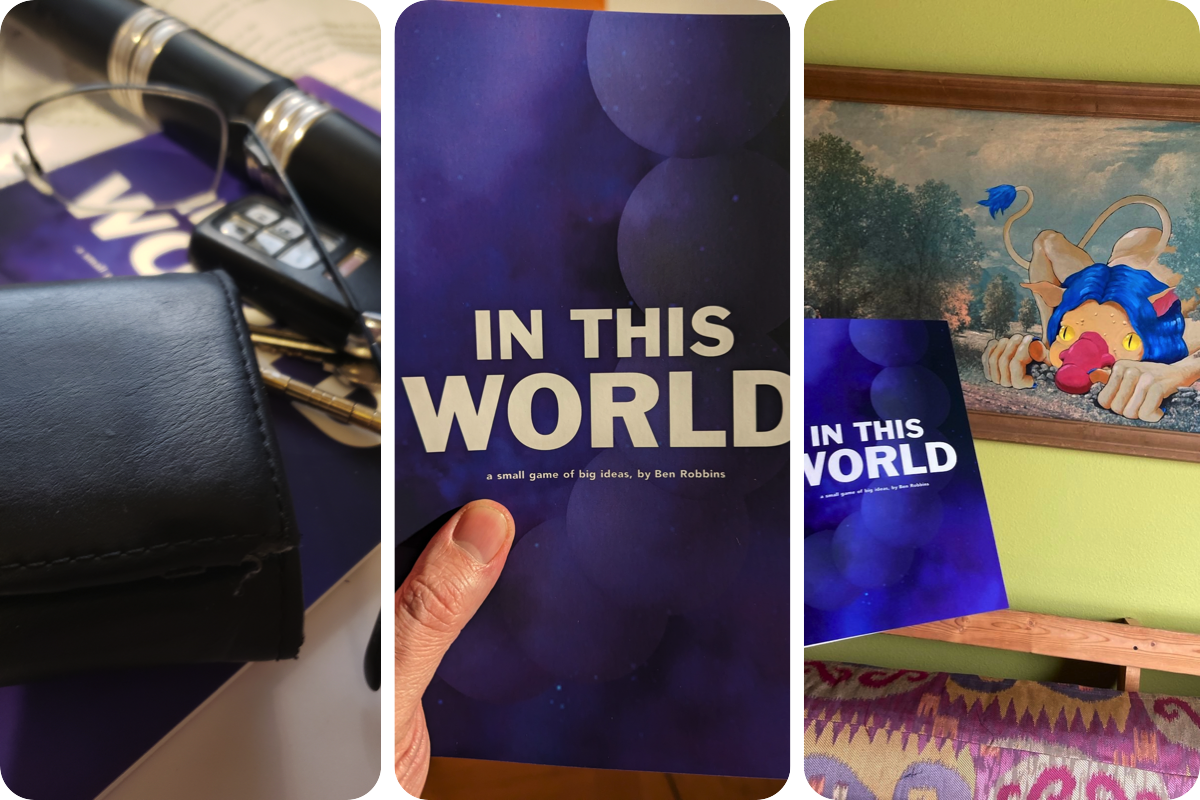
The kickstarter is done and done! There are still stragglers who haven’t answered their surveys (there are always stragglers) but the vast majority have gone out.
And I have to say that, as a game designer, it is tremendously satisfying seeing an idea you kicked around turn into a book that people can hold in their hand and play.
Ben Robbins |
March 20th, 2024 |
In This World
| 2 comments
People have had a long week, everyone’s tired, but we still want to do a little gaming-something-something. This looks like a job for… IN THIS WORLD!
Our topic: Clothing! We were doing the normal brainstorming and we had some good topics (but also “trains!!!”) but when Caroline threw out Clothing I knew that was the one I wanted. I’m always looking for ideas that hit that sweet spot where physical culture and human behavior interact, because I think that makes for really tasty worlds.
If you’re not familiar with … [ read more ]
Ben Robbins |
March 12th, 2024 |
In This World, what we played
German-speaking Follow players, today is your lucky day. Plotbunny Games, who did the translation of Follow, have released a bunch of brand new quests.

Are these destined to be released in English too? I have it on good authority that they just might. And if that is something you’d like to see, let Plotbunny know it!
Ben Robbins |
March 5th, 2024 |
Follow, translations
Are you going to Emerald City Comic Con in Seattle this weekend? Swing by artist alley and say hi to Al Lukehart at booth F-23! Al did the cover art for In This World, Kingdom 2nd edition, and Follow, not to mention our awesome Kingdo-monsters.
What’s it like to work with Al behind the scenes?

Because yeah, the cover of In This World does look kind of like a big caterpillar, and now you can’t unsee it. Do not disappoint the caterpillar!
And if you’ve never been to ECCC … [ read more ]
Ben Robbins |
March 1st, 2024 |
ECCC, kudos
You’re trying to earn a living doing salvage and repair. Maybe on Mars, maybe near the moons of Saturn. Take contracts, fix things, and upgrade your ship.
And there is no combat system whatsoever.
Does that sound interesting to you? It sounds interesting to me. The game is Void Above, and I just heard about it when Jwalt posted a link a few days ago.
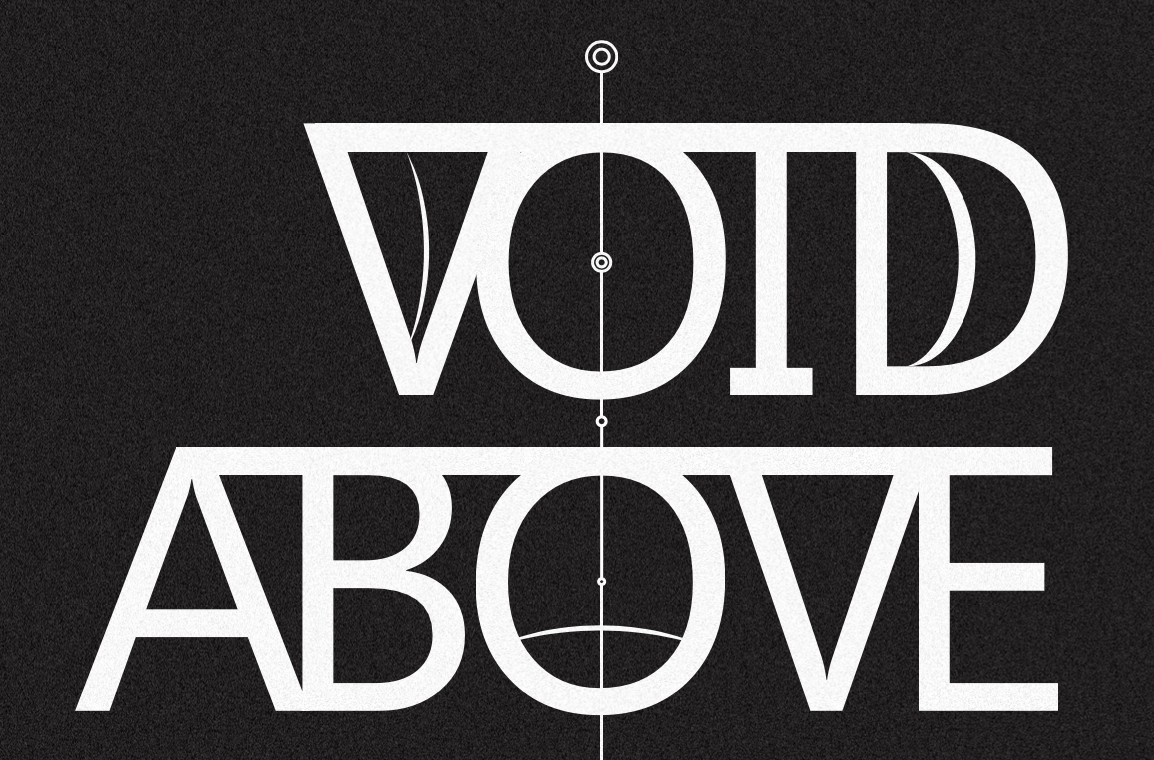
I haven’t played it yet, but the free QuickStart looks like the mechanics back up the concept, instead of just doing vague hand-waving. It … [ read more ]
Ben Robbins |
February 26th, 2024 |
kudos
During our long-running superhero campaign I introduced a new character, Cathy Grant. But I didn’t tell the players she wasn’t really a new character at all, she was an existing character, Captain Danger’s sister Felicity, using a fake name to get a job and get out on her own in the big city.
Did you read that post? Yeah, read that post first.
Eleven games had gone by without anyone putting two and two together, so in Episode 36, “Luck Under Glass”, I figured it was time to let … [ read more ]
Ben Robbins |
February 25th, 2024 |
GMcraft, grand experiments, new century city, what we played
| 5 comments
I’m getting verified sightings of In This World deliveries in the wild!
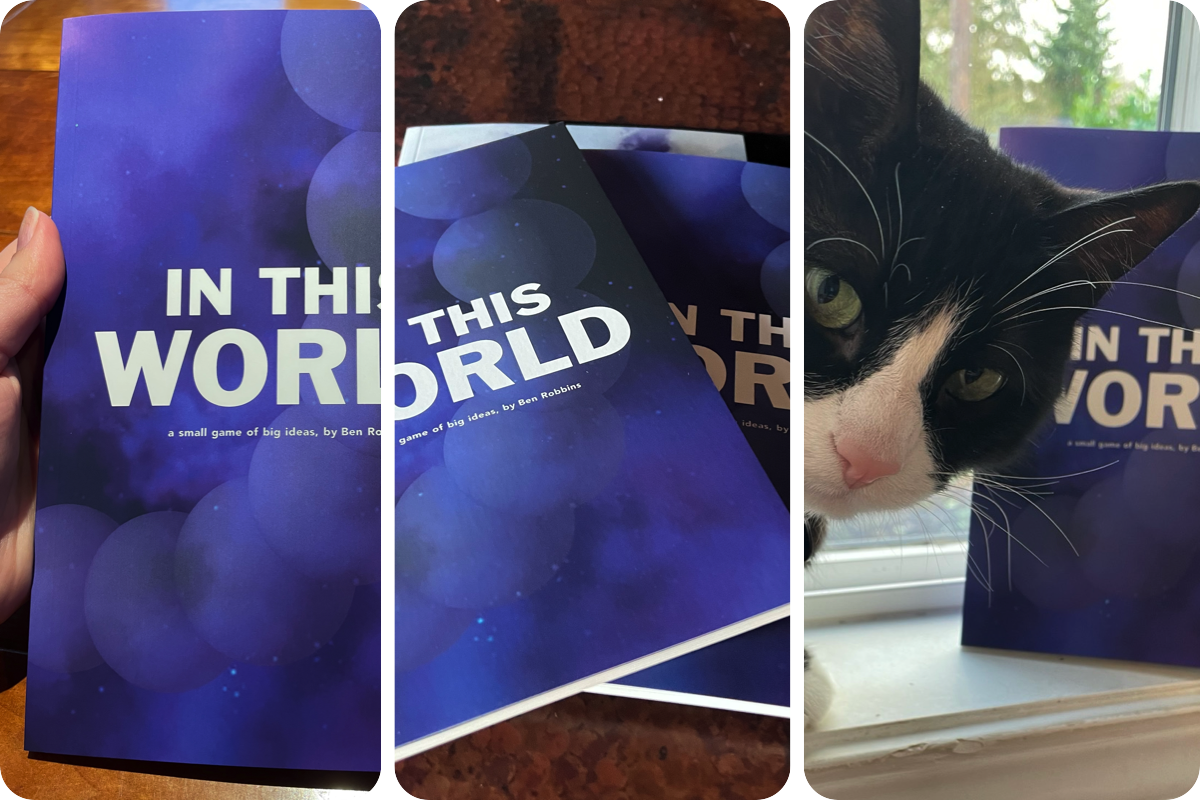
Books are showing up on people’s doorsteps, which means it’s time to get folks together and make some new worlds. Cats not included.
Update: If you too want to show everyone your beautiful book (with or without pets) drop a link in the comments or send them to me at info at lamemage.com and I’ll share them.
Ben Robbins |
February 23rd, 2024 |
In This World


